Sunday, July 7, 2013

Alone, But Not Lonely

by Karkie Tackett (Advanced Student at School Amici)

Karkie's place in Siena
I went to Italy alone because, in the words of Henry David Thoreau, “I wanted to live deliberately.”  I wanted to find my own way, and I wanted to speak and hear the language that I remember from so long ago.  The sound of that language (Italian) brings many memories of courtesy, history, happiness and tradition.  In this frightening world, I wanted to be reminded that in Italy, life is beautiful, slow, and celebrated.  I hoped that I could bring a little of that happiness home with me.
In Italy, I wanted to stay long enough in one place to learn the names of people in a nearby bar or shop.  I wanted to learn the streets, take long walks, see ancient art and architecture, meet new friends and try new types of food.  I didn’t know which town would be the best, but a friend in Rome told me that his first choice would always be Siena.
When Michele Alonzo, Director of School Amici, heard that I was thinking of Siena, he suggested that I should contact the school Saena Iulia.  I looked online, wrote a brief e-mail, and quickly received the first of many kind and generous messages from that school.  Siena, and Saena Iulia, would be mine!
The school is located in an ancient palace directly behind the Duomo.  It’s in the center of Siena and enjoys an easy rapport with stores and bars all around.  From the open windows of the school, you can hear singing, shouting and laughing…all very joyous and all very Italian.
Every day at school, we had conversation in the morning, we enjoyed a coffee during the break, and we finished class in time for a lunch with the other students.  No one wanted to speak English, and so we continued to practice our Italian during meals, over the afternoon and during our walks.
Coffee break with students
The school offers excursions and helps with arrangements such as lodging but it is not a tourist agency.  It is a serious school with expert, well-educated instructors who are native speakers of Italian.  It has a rigorous curriculum and the lessons are stimulating.  I have always been discouraged by the conjunctive tense…but my teacher, Signorina Sabrina, taught it well and I think that (penso che) in the future, it will be (sia) easier for me.
Ricciarelli
After the lessons, we went together to explore Siena and to eat very, very well.  We discovered museums, churches, parks and we also discovered a typical soup called ribollita, sformato di formaggio (kind of baked cheese), whole roasted onions, and the delicate pastry called ricciarelli.   During a visit to Assisi, our director, Mauro Faleri, took us on a marvelous tour of the works of art in the church of St. Frances.  We explored the town of Assisi and found a salumeria (deli) where all the sausages and hams were of boar.
My memories of Siena are made up of many small pieces.  I want to list some of them: when you understand Italian but you remain silent, you sometimes overhear other conversations.  I was surprised to hear two bus drivers speaking rapidly about a woman.  I heard one man saying “….but she’s from Naples; and that is a big problem.”  (Unfortunately, I couldn’t ask what the problem is with Neapolitan women). I got the giggles with an Italian lady while we were waiting at a bus stop.  We both hoped that when the bus came, our driver would be that stupendously handsome one I had seen the day before. 
By mistake, I think I insulted a woman in a grocery store when I asked for dadi di porcini (mushroom stock cube)  “We don’t have any dadi here, signora!” she said, with a little edge to her voice.   She did, of course, have real porcini for sale. One waiter told me he is a student of film, and I looked like a famous American actress, but he couldn’t remember who.  This got my attention!  I insisted that he tried to remember.  Finally, he said it was Gena Rowlands.   I resemble Gena Rowlands to him.  I’ll take that!   He was a fine boy in a great trattoria.  I returned to eat there two more times (Us American actresses are very loyal!). 
I learned a very useful word: scorciatoia (shortcut). A fine word. In Siena, the shortcuts are varied and glorious.
Liz, Mauro, Carol and Karkie
I travelled in Italy by myself but in Italy, you are never alone. The Sienese, like most Italians, are a little formal (we must always greet each other with buongiorno ….always), but warm, and welcoming.  They want to help visitors and they love to chat.  My classmates at Saena Iulia (Juliet, Carol and Liz….God bless you all) were marvelous and I hope to see them again and again. My favorite thing to hear was "But madam, you speak Italian". Thanks to my teachers Michele, Mariateresa, Mauro and Sabrina, it is almost true! I said to one man that my Italian is a little rusty. He laughed and said: "Then you must come back to remove the rust". I think that he is right.

Tuesday, June 4, 2013

Un Espresso, per Favore

by Michele Alonzo (School Amici Director)

Art in a Cup
It is probably the sentence that any beginning Italian students is able to say when entering a café in Italy “Un espresso, per favore”. But it may be more complicated than you think if you consider how many types of coffee beverage you can order in Italy.
As well illustrated in a famous 1997 Bozzetto’s animated cartoon, comparing the habits of Italians with all other Europeans, having a coffee in Italy may require an extensive tutorial.
It is a fact that you can have at least a dozen of different variations of beverage with coffee to enjoy la dolce vita. The following list describes the most common types:

Doppio: two regular espresso in the same cup (50 ml)
Lungo: A longer espresso, containing more water and therefore less strong (35 ml)
Ristretto: A concentrated espresso; a very strong coffee! (20 ml)
Macchiato caldo: Espresso with a few drops of warm milk
Macchiato freddo: Espresso with a few drops of cold milk
Corretto: Espresso with a shot of liquor (grappa or anisette)
Con panna: Espresso with whipped cream on top
Freddo: Cold espresso served with ice in a glass
Cappuccino: Espresso (1/3) with warm milk (1/3) and milk froth on top (1/3)
Caffè mocha: A cappuccino topped with cocoa powder
Caffelatte: A glass of warm milk with an espresso added in it
Marocchino: Cappuccino with chocolate dusted on top
Affogato: a scoop of vanilla gelato topped with a hot espresso
Decaffeinato: Espresso made with decaffeinated coffee

Classic espresso is technically hot boiled water mixed with ground coffee beans in a specific ratio. That is the key word: ratio. In fact there are approximately 0.3 ounces of coffee to one fluid ounce of water in a single shot espresso.  About the same quantity is used to prepare a drip-brewed coffee cup, which instead contains 8 fluid ounces of water. So it is intuitive that the concentration of an Italian espresso is eight time the one of a regular average cup of coffee at an American restaurant.
Also due to the higher than atmospheric pressure involved, in the first case the mixture of water and steam reaches temperatures well above 100 °C, causing a more efficient extraction of caffeine and flavors from the grounds, and resulting in a stronger brew than the one obtained by drip brewing.

Moka Express Bialetti
It is thought that the word “espresso” originates from the procedure to prepare the coffee, by which hot water is forced at high pressure through the aromatic ground powder. However, this word in Italian also means “speedy, quickly”; in fact there are treno espresso (a faster train), and raccomandata espresso (a piece of mail delivered quicker than regular mail).  Considering that Italians are always on the run because chronically late, I would lean toward the second origin…
The history of Italian coffee goes back to the late 1800’s when Angelo Moriondo in Turin first presented a patented way to prepare the hot beverage having water pressurized by steam passing through the ground coffee. A few years later other Italians improved the procedure by introducing on the market an espresso machine that could make a coffee in a few minutes.
But the popularity of homemade coffee really became widespread with the introduction of the mass produced Moka, the machine invented by Luigi De Ponti and patented for businessman Alfonso Bialetti in 1933. Still today the Bialetti company produces the “Moka express”, an aluminum pot with bakelite handle, which has become an iconic design, and considered a piece of art displayed at the MOMA in New York City.

The difference between the homemade coffee and the one you order in a café is the pressure of coffee extraction, which is about 22 psi in the Moka and 130 psi for a real espresso. Also the foam emulsion produced by a Moka is not as dense as the crema (literally cream) that you can taste on top of a single shot espresso.
 
San Marco Square, Venice
Whatever type of coffee you order, if you are on a budget, make sure that you sip it just standing at the counter. Sitting at a table can double the price and if you happen to be on San Marco Square in Venice, an espresso can easily cost you about ten dollars! You could say “Who cares, I am in Italy”. And that’s exactly what counts. How can you have a bad time when you start your day tasting the unique aroma of caffe' espresso, in front of the Venetian Laguna or the Spanish Steps, with a street artist singing Volare…
 

Sunday, June 2, 2013

Italian Art in a Nutshell (#2)

by Kris Killen Olberding 
(art aficionado, empowered female, and administrator at the Art Academy)

Italian Art in a Nutshell features a follower of Caravaggio, Artemisia Gentileschi, and her masterpiece "Judith Slaying Holofernes,” 1618-20. 
Gentileschi was a highly accomplished early Baroque painter with the rare distinction of being a female artist of the era who achieved a high level of respect and fame. Born in Rome to a painter, Gentileschi worked alongside her father in his workshop, and like him, she was profoundly influenced by Caravaggio. Her work often depicts strong, female protagonists from mythology or the Bible. This particular work is gory and violent, telling the dramatic tale of the widow Judith who sought revenge against Holofernes, the general who besieged her town. Judith seduced him, got him drunk, and with the assistance of her maid, decapitated him with his own sword, taking his head as a trophy for her people. Caravaggio's influence can be seen in the bold brushwork, vigorous action, rich hues, and dramatic play of light illuminating the dark and horrifying moment that Judith attacks Holofernes.

Speculation abounds that Gentileschi was attempting to exorcise her own demons through such works of female empowerment, since she herself was famously the victim of rape at the hands of her art instructor. The lengthy trial that followed was very public, and the artist herself was openly tortured and interrogated during testimony. Amazingly, the court ruled in her favor, and her rapist was sentenced to one year in prison, which he never served. In an attempt to restore her virtue, Gentileschi’s father arranged a marriage for her in Florence, where the brash, young artist thrived, displaying tremendous skill at marketing herself and her work to the rich and famous, including the Medici family. To this day, she stands as a symbol of indomitable female spirit, and continues to hold her place in history as one of the boldest, most defiant, and progressive artists of her time. This painting resides in the Galleria degli Uffizi in Florence.


Monday, May 27, 2013

How Studying Abroad Changed the Way I Travel


by Melinda Cebula Harris  (current student at School Amici)

For three or four years I was a tourist. I would pack my bags and jet set to all the “must-see” locations of the world. Soon, I found my place of choice, Italy. I would go every summer and sightsee. It was wonderful, but on the crowded streets of Rome or Venice with my camera in one hand and my city map in the other, it was impossible to become acquainted with the true culture of the country. This is when I decided to learn the Italian language.
Melinda in Todi

My studies began close to home in Cincinnati, Ohio at School AMICI. I immediately felt at ease with my patient and gentle teacher from Calabria, Gerardo. Gerardo would entertain the class with stories of his Italian childhood, while teaching us the Italian ABCs, numbers, and basic grammar. School AMICI created a solid foundation, which for me was the key to my success in my subsequent studies abroad.

In 2012 I chose Todi, a tiny town perched upon a tall two-crested hill in central Italy, as my place of study. Experience had taught me that the smaller towns offered the most authentic experience. For three weeks I studied both privately and in whole group at La Lingua La Vita. My confidence and ability to speak Italian improved daily with the guidance of my teachers. What I loved most about La Lingua La Vita was the opportunities they created to interact with the local community. Through the school, I attended weekly cooking lessons hosted in the countryside home of Rita, a local Italian famed for her cooking. Rita spoke no English, so even when I was in doubt or my Italian confidence wavered; I had to rely on my language skills. This created many laughable moments as hand gestures and air drawings appeared to be games of charades rather than a group of girls learning the simple secrets of delicious Italian cuisine. 
Cooking with Rita

My mother, Linda, also a School AMICI student, had traveled with me to Todi. At first she was going to take the lazy lifestyle, taking a late morning espresso or a passeggiata (stroll) to the market… but something about La Lingua La Vita caught her attention and she enrolled on the very first day of classes. To my mother’s delight, her daily private lessons were held at a charming local café specializing in delicious fresh fruit gelato and strong Italian coffee. Her teacher, Antonella, quickly became a dear friend to both my mother and me inviting us to see the home she and her husband were building and to the church she so passionately loved. Our friendship with Antonella and her family continues to this day.
Melinda and her mother, with Antonella and daughter
Studying abroad changed my passion for traveling. I was no longer excited to see the sights but to know the Italian people and their way of life. These moments, these connections, these invitations into the lives of the Italian locals are exactly what had been missing in all my years of traveling as a tourist. It was the commonality of the Italian language that made these connections possible, and for this I will always be thankful for School AMICI and La Lingua La Vita.
 

A few notes of interest:
Todi has, by far, some of the most beautiful views I have seen in all of Italy. If possible, choose an apartment with a view of the countryside. As an added bonus if you travel in July, when Todi hosts an international ballooning competition, the sky is especially beautiful as colorful hot air balloons paint the sky.
If Italian cuisine temps your palate, you will not be disappointed. For such a small town I was delighted by the quality of all my dining experiences. Antica Osteria della Valle was my favorite.
And finally, I found Todi very friendly for people who might have trouble walking long distances. The school, small grocery, restaurants, and shops are within close proximity of each other, making this an ideal location for people of all ages.

Wednesday, May 15, 2013

It's Not a Vacation

by Marcello Fantuzzi (Italian Exchange Student in Madeira, Ohio)


Dear reader, 
I want to tell you about an experience I will never forget; the greatest experience I have had so far in my life.
On August 23rd 2012 I left my native country, Italy, to go to the USA by myself for a year. I was going to be hosted by a family who lived in Madeira, Ohio; I got my placement on August 15th so I had a very short time to get everything set, documents included. 
Lentigione: Marcello's hometown
When I heard that I was going to go there, I had no idea where that place was. I remember thinking  “Where in the heck is Madeira?” so of course I googled it and I found this little town, my first thought was “Oh, c’mon, really?!”, only because I didn’t know what to expect.
I was a seventeen year-old guy ready to experience new things, just thinking about enjoying my life and I did not spend a single day not thinking about my departure.
The day I had been waiting for a long time finally came: it was time to leave. My mom and dad took me to the airport; I can’t even think about a way to describe how I was feeling. I had so many things going on in my head, I was really sad, I knew I was going to miss my family and my friends a lot but, on the other hand, I knew that this was going to be a life changing experience and I had no doubt it was going to be worth it.
After all the tears my mom and sister shed, I finally got on the plane and started thinking about how big the decision to leave was, and how unconsciously brave I had been.
 
After that endless 12 hour flight it was time to meet the host family, who came to pick me up at the airport. I remember I was really nervous. I had skyped with them before but it’s not like talking face to face. I finally saw them at the airport, they welcomed me with a giant sign saying “Welcome Marcello, Benvenuto”; and that helped me a lot emotionally. My host family has actually always been very helpful in everything; all the time I needed help, they were always available to give me a hand. I am and will always be thankful to them for the experience they allowed me to live.

Marcello meets his host family at the airport
After I had met the family it was time to leave the airport, it was time to go home get everything set for the following day, the first day of school.
I was super tired because of the time difference and I had no idea of what was going on when people were talking, so the first day it’s kind of foggy in my brain, I just remember I met a lot of people whose names I couldn’t remember and the school was very welcoming and helped me since the first day.
Before coming here, World Heritage, my student exchange organization, had a lot of meetings with students, in order to warn and prepare us for this experience. I had to know how to behave and to approach problems I may face. That was really helpful and I thank World Heritage for it.

The biggest problem in the first few weeks was the language. I wasn’t missing home yet because I had too many things to do and not enough time to think about my family and my friends, but as the time was going by, the language problem became less and less important, and got replaced by the fact that my family and my friends were not here with me. I really missed them.
Christmas came fast, the time flew even if some days were really rough; in Italy Christmas is a really big deal and you must spend it with your family, so 2012 was the first year that I was spending the most important celebration without my family; I was sad, especially when I skyped with them and saw all the relatives at my grandma’s gigantic table all screaming and eating the food I was missing the most.
Now that I think about it, I started enjoying my experience in the US from the beginning of January, because after winter break I made so many real friends I could hang out with. The language wasn’t a problem anymore, the moments in which I had to stand awkwardly nodding about the questions I was asked just because I wasn’t able to understand were finally over and the fact that I was able to have regular conversations with people without using Google Translate every time was a big step towards a ‘normal’ life. I was also getting used to the physical distance between my family and me, so basically from that time I realized that Madeira is a great place to stay even if it’s really small and the school is not as big as the one I attend in Italy. A big thing that made me happy was the fact that in the people’s eyes I wasn’t an exchange student anymore; I was one of them.
On January another important thing happened, I made the decision to join the school musical, something I had never done before. However, since I’ve always loved music, I thought it would be worth trying, and it was. I didn’t think it would be that much work, but we rehearsed a lot in order to perform a great show. I became really close to the people who were in the musical; it’s a great environment to build solid friendships, and everyone helped each other. 
At the school prom
The show was great and if I think that I was part of it, that I was so lucky to spend so much time with those wonderful people, I will just want to rewind my life and live those moments again.
I remember one day I was in the car with a friend of mine, we had just had McDonald’s when he suddenly said: ”Hey man, I’m really going to miss you when you leave; it’s not going to be the same without you” and I responded “My life is here now, I love the people here and I have such good friends; I don’t want to leave, dude”. I remember that when he said that he was going to miss me, I was feeling crushed because my departure was getting closer and closer, but on the other hand I was really happy; this could seem a little strange, but the fact that I had made really good friends, the fact that I was able to build important moments and memories that my friends and I will never forget, makes me accomplished, makes me feel like I fully enjoyed this experience and I won’t have regrets about it.
I also had the chance to travel a lot thanks to my host family. I have been in a lot of places with them, such as California and Florida. I enjoyed this whole experience with them a lot; and next year they will probably come to Italy to visit me and my parents. The relationship I have with them is fantastic and I will keep it for my whole life.
 
This year in the USA completely changed me and helped me to overcome a lot of obstacles by myself, it made me discover new aspects of my character, things that I would have never discovered if I hadn’t be forced to do stuff I had never done before.  This year made me become a much more independent person; I think every single guy has to have something that turns him into a man, some sort of situation you are forced to face, some act of bravery that makes you realize “Wow, I’m not a child anymore”. And I’m not talking about your 18th birthday or the day you get your driving license; I’m talking about something much more profound and meaningful.  This was definitively my feeling.
There’s a big difference between the Marcello before the departure and the one who’s writing this paper. This was not a vacation; it was a step up in my life; and the memories of this fantastic experience will stick with me forever...

Tuesday, April 30, 2013

Italian Art in a Nutshell

Once upon a time I was an Art History major - before I got practical and switched to Medieval History.  Maybe that's why I look forward to Kris Killen Olberding's regular posts on her Facebook page. She, too, was once upon a time an Art History Major, is very smart and has excellent taste.  Recently I asked if she might write something specifically about Italian artists and she was kind enough to share her favorite painting.


Conversion on the Way to Damascus
 
For my friends at School Amici 

"Conversion on the Way to Damascus," 1601, by Michelangelo Merisi da Caravaggio. One of the most brilliant painters of the early Italian Baroque period, Caravaggio was born in Lombardy and later moved to Rome, where he soon became celebrated for his vigorous and highly theatrical style, which brought a revolutionary humanity to his religious subject matter. He is credited with creating Tenebrism (from the Italian “tenebroso” meaning dark or gloomy), a technique which emphasizes violent contrasts of light and dark, with the dominant darkness accentuated by piercing illumination. Further cementing his rock star status, Caravaggio was also known for his swaggering personal life. The infamous painter was jailed several times, involved in many brawls, accused of killing a man in a sword fight, and had a death warrant issued against him by the Pope, forcing him to flee to southern Italy. While in exile, he died mysteriously of a fever at the age of 38, still hoping for a pardon. This painting resides in Rome at the church of Santa Maria del Popolo.

Friday, April 5, 2013

A Stroll in Italy!

by Paola Girelli Harding    

When asked to participate in a ‘working experience’ in Italy in November, I jumped at the opportunity to join a supplier on a fabulous Italian journey starting in Rome, and including Torgiano (Umbria), Lake Como (Lombardy), Verona and Mira (Veneto).  The whirlwind week ended just in Mira/Venice, a stone’s throw from Verona, where I would stay for another week. 
      While the visits and the accommodations in the cities and towns on the work, and the inspection part of the trip were breathtakingly unforgettable, my Verona and Veneto experience was unparalleled.
In front of Ponte dei Sospiri (Venice)
      Boarding the train in Mestre bound for Verona on a sunshine morning was especially delightful since two days earlier we experienced a downpour in Verona as had not occurred in decades.  Gazing on hills and planes covered with vineyards, I planned my ‘foodies’ visit putting the pastry shop Cordioli (very near the Hotel Accademia) at the top of the list.
      Visiting Venice was magical, sunny, mild, and I almost forfeited the trip to Padova as a high tide had been predicted!  We crossed the Grand Canal to Rialto Market by Traghetto, available in several areas along the canal between the three bridges spanning it, for just 1,50 euro, great!  We went to the top of St. Mark’s bell tower for a bird’s-eye view of the city and lagoon.  I treated myself at Café Florian, a break at Do Colonne with polenta e bacala mantecato and a spritz sitting outdoors!  Departing late afternoon, the sun setting all rosy on the lagoon, what an arrivederci alla prossima volta! 
In the Lessini Mountains (north of Verona)
      I had not visited Spiazzi in the Lessini Mountains, Madonna della Corona/Crowned Madonna, for years, where I spent  summer camps as a child.  The church perched on the rocks, almost floating above the Valdadige below as breathtakingly beautiful as I remembered!
      Sirmione and Torri del Benaco, on Lake Garda, Borghetto sul Mincio, were my favorite stops!  They were quieter (with many stores and hotels closed for the season).  Of course I could not have visited these places without my cousin Stefania who kindly offered her time and her car to allow for memorable stays.
      Autumn in Italy was definitely as great an experience as expected, I enjoyed persimmons both on the trees and savored them daily.  Roasting chestnuts permeated the air.  The trees changed colors, to reds and yellows, and although I prefer warm weather, I would recommend an autumn stroll like this one to anyone. My next cool weather trip is planned for Carnevale di Venezia in 2014!!! 
Would anyone like to join me?

Paola Girelli Harding is an Italian travel planner specialist.


Monday, December 3, 2012

Why Savona?

by Kathy Holwadel

"Why Savona?" people immediately ask when they hear about our new home on the Italian Riviera.

"I've always wanted a villa," they tell me with a misty, far-away look in their eyes.   "A view of the sea" or "anything in Tuscany" are other popular responses when friends describe their Italian dreams.  But nobody ever says they want a simple apartment in a medium-sized city in Liguria.   Folks are even more confused when we tell them that Michele's family is in Naples, 6 hours away by train, and that neither one of us had ever been to Savona before we went house-hunting late last year.

Torretta, symbol of Savona
When we started to talk about a long-term commitment to more time in Europe, we had no idea where we wanted to locate.  I spent at least an hour a day for a year combing real-estate listings on the internet, talking to well-traveled friends about where they would buy and learned a lot about Italian geography.
After a while, I figured out what was important to us:

1. Affordability.   It was very important to both of us that we never have to wake up in the middle of the night worrying about our finances.  That means we had to be able to afford not just the apartment and furnishings - we had to factor in the cost to get around, utilities, taxes and eating.

Italian soccer fans in Piazza Mameli
2.  A Thriving Community with Lots to Do, Year-Round.  While you can find plenty of bargains in tiny, little towns out in the middle of the country-side, we wanted the advantages of city-life without being overwhelmed by noise and traffic.  Savona has 62,000 year-round residents - and serves as a port for Costa Cruise lines, which means lots more nice shops and restaurants than you would typically find in a city of this size.  There's a lovely medieval section, a big fortress, a theater, a couple of museums, and Genova with lots of culture is only an 40 minutes away by train.  A villa in the Tuscan countryside is great if you're there for two weeks in the summer, but for extended stays, especially in the winter, we needed more action.

Tipical porticos in Savona
3.  Walk-ability.  Northwestern Italy is beautifully connected by public transportation alternatives and Michele and I can take a 6:30pm flight from Cincinnati and unlock our front door in Savona around 1pm the next day.  Great train service, an easy to use bus system,  local bike and car-sharing programs all combine to make life in Liguria very pleasant without the cost of private transportation.  From our prime location in a 19th century building in the historic city center, we walk to the train station and to get our groceries, as well as at least 5 hardware stores within 2 blocks of our house.  I can go across the street at 11pm to pick up a wood-fired pizza.  There's a multi-screen theater, lots of bakeries, shady parks, a couple of pedestrian zones for high-end shopping, bars, bookstores, tons of sidewalk cafes, the beach, fantastic restaurants and several great gelato choices - all within walking distance.  It's also easy to get to Southern France, Montecarlo, Nice and all the beautiful tourist attractions - like Cinque Terre and Portofino - in Liguria.

4.  The Sea.  Since I grew up land-locked in Ohio, I wanted our second home within walking distance of the beach.  The rhythm of the waves, all that blue, the empty sky and water - it's mesmerizing.  We couldn't afford smaller tourist towns on the Riviera, but the bigger capital cities of Liguria have a wider range of properties.
Restored kitchen
5.  Ristrutturato.  The first thing a real estate agent asks when you're looking for an older property in Italy is if you want "da ristrutturare" or "ristrutturato."   I thought all we could afford was  a "fixer-upper" but Michele's only comment about the first apartment we toured was, "E' come Pompeii" (It is like Pompeii) and our agent quickly figured out that we were not suitable candidates for restoration.  We had so much to learn about property in a foreign country that major renovation was not realistic.  So we gave up restoration to buy Old World Charm that was move-in ready. 

6.  Friends.  My best friend and her husband inherited a small apartment from his grandmother in Albisola Marina, 2 miles down the road.  That's how we found Savona in the first place.  They let me stay there while I was house-hunting.  Michele's friend, Laura, also inherited her place in Camogli, a stunning coastal town on the other side of Genova.  Neighbors in our Cincinnati condo own a house in Bordighera near the French border and it was nice to be able to visit when Michele was working in Ohio.  We've recently met a couple from Houston who own an apartment one block from ours.  It's a small world and the stars for Savona came into perfect alignment.

Via Pia: medieval section
So these are the whys of Savona, our one-floor-walk-up, "ristrutturato" Italian dream. Here I am, right now, sitting at my desk in my bedroom, typing this blog-post a year later about how we made the big decision to change our lives and there's a statue of St. John the Baptist gazing down on me from the small church across the street.  Michele arrives tomorrow.  We'll fly to Sweden to meet our new grandson.  Then we'll spend the holidays in Napoli. And everyday, no matter where we happen to be, we will pinch our selves, look into each others' eyes and repeat the same thing we always do.  "Aren't we lucky?" we'll say.  We stumbled across more charm, more beauty than we dared dream possible in our conservative, practical way, enough romance to last a lifetime in Savona, by the sea.

Friday, November 9, 2012

It's Tombola Time!


Family playing tombola
 Every year Laura invites us over to her house to celebrate New Year's Eve. A typical Italian, she is happiest when her kitchen is over-flowing with friends and family.  It doesn't matter that she runs a big research lab at University Hospital while raising two teenaged children, always worried about grants, zipping all over the world for conferences. She doesn't flip out if the wine glasses don't match.  Paper plates work fine.  Everybody brings something. She's the kind of hostess I've always wanted to be, one who enjoys her own parties and can't wait to coordinate the next get-together.

The key to Laura's success is her strict adherence to tradition, which is probably the single biggest contributing factor to Italian survival over centuries of foreign invasion, that innate, stubborn refusal to even consider the possibility that the show will not go on exactly the same way it has always has, no matter what.

Guests arrive between 9 and 10pm.
The same group of international misfits is invited every year. Joanna from Finland, Jens from Germany.  A couple of Americans like me thrown in to be polite. Everybody with kids in tow.
Laura bakes two trays of homemade focaccia, one with onions, a second with olives.
And she always cooks a big pot of lentil soup, because if you eat lentils on New Years Eve you will be lucky with money in the coming year.
A couple from Tennessee stops for a big order of carry-out barbeque on the way back from their parent's.
After dinner we all write our New Year's wishes on a piece of paper, fold it over so no one can see, and burn them in the fireplace.
And then we play tombola.

Tombola main board

Everything is fun.  But it's the tombola we look forward to more than anything else from year to year.

Which is funny, because it's just the Italian version of Bingo.  Nothing fancy or electronic.  But it's when the kids come in from the family room and the parents get up from the dining room table and we all take a seat together in the living room that the party really begins.  The teenagers always clump together around the couch, perched on the arms and the coffee table.  Michele calls the numbers, first in Italian, then English.  Laura's son, Alexandros, helps.  We use beans and bottle caps as covers.  There's the normal complaining.  "This card is terrible."  "I haven't got a thing."  But pretty soon somebody covers two in a row and yells, "Ambo."  After Michele checks their numbers, the winner walks to the front of the room , kind of embarrassed by the attention, but pleased to be a winner, while everybody whistles and makes noise.    Laura's husband, George (he's Greek) usually shops for all the prizes at the Dollar Store that morning and hands out one of the "Ambo" bags from the hearth.  We watch as the person returns to their seat, opens the bag, and holds up a pencil sharpener or little stuffed bear. "Terno" is three numbers, "Quaterna," four, and "Cinquina" is five.  "Tombola," the grand prize winner, is when the most lucky person of all covers all the numbers on their card.  It takes over an hour to play one game.

This is the way they do it in Italy every year, every generation since the game was invented in Napoli in 1734. When we are in Italy for the holidays and go next door to call Don Peppino and Signora Anna, the couple who moved in the same year as Michele's parents, forty years ago, inevitably three generations are all huddled around the dining room table playing Tombola.

This year School Amici wants to share Tombola with our first-grade Adopt-A-Class at the Academy of World Languages.  The school is home to students from more than 40 different countries, speaking 38 different languages.  What better way to bring people of so many different cultures together than through a rousing game of Tombola?

We're looking for volunteers to make this a special party for these six-year-olds, many of whom are new to our country.  It's on November 20 at 12:45p.m., Academy of World Languages and we need prizes, presents and Italian pastries to make it a day that we'll all remember.

Please contact Kathy@schoolamici.com or call 513 681-0224 if you can play a part in a great new tradition.


Wednesday, August 1, 2012

The American Tourist in Italy

by Gabriella Mileti  (Italian version follows)

Summer is here, which usually means one thing: a family trip to Italy….at least that’s how it was in my household growing up.  If you are indeed off to “il Bel Paese” this summer to get a taste of “la dolce vita,” let me provide you with some tips.  Not only because I’ve been to Italy countless times as a “tourist,” but having lived in Italy for five years, I can spot a tourist from about 5 meters away, yes I said meters.  My friends and I would even have bets on spotting “the American” out of all the tourists around the city.  I would always win.    

Cuisine
First and foremost, when traveling to Italy, you almost have to forget what you know about Italian food or at least think is “Italian.”  Italian-American dishes are rather different than Italian dishes.  In fact, it may come to a surprise to some, but the Italian cuisine is very simple and is not loaded with spices and garlic, like it is in America.  In Italy, food is so fresh and full of flavor in itself, sometimes all you need is to add a touch of olive oil. 


Classic spaghetti with tomato sauce

If you order a salad as an appetizer at the beginning of the meal, the waiter will probably look at you strange.  Especially, if you ask for it with “Italian dressing”…which of course does not exist.  Italians stick to simple extra virgin olive oil and vinegar, usually Balsamic from Modena and salt to dress their salad.  Salads in their simplicity are eaten at the end of the meal to cleanse the palette.  Oh, and, despite its name, a Cesaer salad is an Italian-American invention.  Also on the appetizers menu, you will not find fried calamari with marinara sauce.  For one thing, fried calamari is served as a second dish with a squirt of lemon.  Furthermore, the term “marinara sauce” is the Italian-American word for a tomato sauce.  If you ask for “marinara sauce” in Italy, they will give you a seafood based sauce…as the word “marinara” means “sailor style.”  By the way, don’t dare asking for butter with the bread basket on the table, you will simply not get it. 
Moving on to the first course, believe it or not, Italians do not eat pasta at every meal or every day.  Pasta is often replaced by a risotto, minestrone or soup, or and even skipped completely.  When eating long pasta, Italians never roll it with a spoon; it is considered ill-mannered and rude.  The same rule applies to cutting long pasta with a knife.  Italians also do not mix first courses with second courses.  That’s not to say you won’t find meat in your pasta, as there are countless meat sauce recipes in Italy.  You simply won’t ever get steak with a side of pasta or risotto and certainly not a dish of spaghetti and meatballs…another celebrated Italian-American invention. 
Lastly, if you want to avoid an Italian looking at you abnormally, ‘ixnay’ on ordering a cappuccino after lunch or dinner—espresso or espresso macchiato, yes, cappuccino, no.  Italians take their food very seriously.  By now, you’re probably rolling your eyes and think they’re overdoing it a bit, call them crazy or weird, but let’s not forget, for centuries, Italians have taught the world how to eat and the Italian cuisine is the most imitated in the world, period.   

Fashion

Made in Italy fashion shop

            Speaking of teaching the world, we can’t talk about visiting Italy without mentioning tourist fashion faux pas; a topic that hits home for me.  I get it, it’s hot, you’re walking around all day, you’re sweaty and feet are swollen…looking chic is the last of your worries.  Wrong.  You’re in Italy!  It should be the first of your worries.  Fashion in Italy goes back centuries.  From the Romans to the Renaissance, looking good is in our blood, there’s simply no way around it.  I’m not saying you have to look like Audrey Hepburn and Gregory Peck in “Roman Holiday,” although that would be so incredibly chic, but how about a little bit more attention to what you’re putting on especially in respect to your surroundings. 
Europe in general is a “dress up” society.  Women put on stilettos to go to the supermarket and men always wear a suit or jacket to go to work.  As a tourist, that way of dressing is not practical, but in Italy there is an expression that I, still to this day, have difficulty in translating and it is “la bella figura.”  This means basically making a good impression and looking good, no matter what.  So just think twice before you put on mesh shorts or denim cut offs if you plan on walking on Via Montenapoleone in Milan or visiting the Vatican in Rome.  Additionally, you will notice, no matter how hot it is in the city and trust me it gets HOT, Italian women do not expose a lot of skin.  In Italy there are two ways of dressing: city dressing and beach dressing.  Skimpy tank tops, Daisy Dukes and flip flops are for the beach and beach towns.  Besides, with the strict dress codes found in churches and museums, you will be denied entry and the “beach outfits” will get you nothing but a lot of dirty looks.  It all goes back to the fact that it is a “dress up” society and looking good, always, is just who we are.  Great alternatives to shorts are flowy sundresses and skirts, which will even keep you cooler in that Mediterranean heat.    

Dos & Don’ts
            So after covering food and fashion, there are just some basic etiquette dos and don’ts you definitely want to look out for while traveling to Italy, especially if it’s your first time.  The first one, and one of my favorite to tell tourists is, don’t eat at a restaurant that has the menu translated in 14 different languages.  While you may think “oh, how sweet of them,” chances are the restaurant is a tourist trap—unfortunately taking advantage of people who don’t know better i.e. the typical tourist.  These types of restaurants are found in super-touristy areas of an extremely popular city.  They are usually way over priced and the quality of the food is rather questionable.  This is obviously not necessarily true for all restaurants that offer the menu in English, however when you see one in many languages, run the other way.  You don’t need to speak Italian to eat amazing food in Italy.  Do a little research before traveling.  Find out what are the traditional dishes of that particular city or what the region is famous for.  Walk into a restaurant with a sense of adventure to explore and try new dishes that you probably will never find back home. 

I’m sure you know many Italian words.  Just walking into a Starbucks or opening a menu at any restaurant, you are immediately bombarded with Italian words.  From ciao bella, buon giorno, arrivederci, to venti, grande, latte, espresso, macchiato, spaghetti, antipasto, gnocchi, the incredibly harmonious, romance language, that is just beautiful to listen to has made its way into the American culture.  Although English is spoken in the large tourist cities, don’t be surprised if it isn’t spoken in the smaller cities and towns.  However, with the help of a little phrase book, you will be appreciated for trying, unlike the French.  Yet, remember, with the Italian language there is a formal and informal way of addressing people.  So if you greet people you don’t know with “ciao,” they may look at you strange and consider it impolite.  A good tip is to simply acknowledge them with “buon giorno” or “buona sera.” 

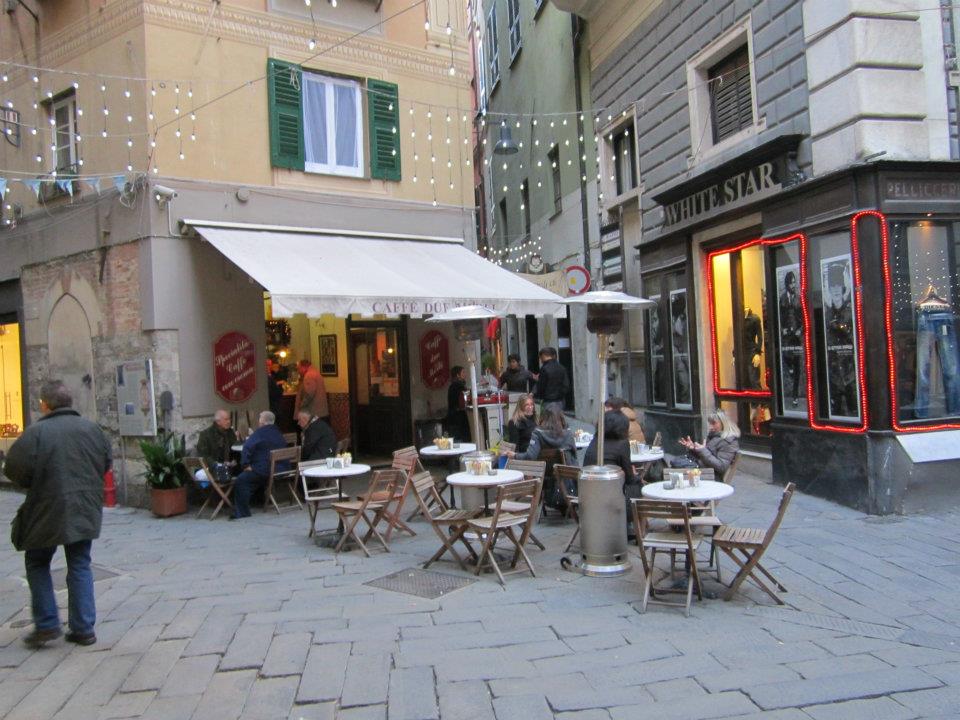
Roman Holidays

Yet if there is one piece of advice I can give you, it would be to relax, enjoy yourself and don’t rush and try to cram 10 cities in 10 days.  This is the country that is known for “dolce far niente,” “sweet doing nothing.”  Not so sure how that mentality is working out for them now with the global financial crisis; but who cares.  You’re on vacation—get lost in Venice, don’t buy counterfeit handbags in Florence and remember when in Rome, do as the Romans do!  Buon Viaggio!   

Il Turista Americano in Italia

L'estate è arrivata, quindi vuol dire solo una cosa: una vacanza con la famiglia in Italia…almeno era così nella mia famiglia durante la mia infanzia.  Se veramente andate a visitare il Bel Paese quest’estate per assaggiare la dolce vita, permettetemi di darvi dei consigli.  Non solo perchè sono stata in Italia tante volte come “turista,” ma dato  che sono vissuta in Italia per 5 anni, riesco ad identificare un turista da 5 metri, si, ho detto metri.  Io ed i miei amici facevamo delle scommesse per individuare “gli americani” in gruppi di turisti.  Io, ovviamente, vincevo sempre. 

La Cucina
            Innanzitutto, quando viaggiate in Italia, dovreste praticamente dimenticare ciò che conoscete del cibo italiano o almeno cosa pensate che sia “italiano.”  I piatti italo americani sono molto diversi dai piatti italiani.  Infatti, magari vi stupirà sapere che la cucina italiana è molto semplice e non è carica con spezie e aglio, come in America.  In Italia, il cibo è così fresco e buono per sè che a volte ci vuole solo un filo d’olio. 
            Se ordinate un’insalata come antipasto all’inizio del pasto, il cameriere probabilmente vi guarderà strano.  Soppratutto se la chiedete con “Italian dressing”…che non esiste.  Gli italiani usano semplicemente olio extra vergine e aceto, di solito balsamico di Modena e un po’ di sale per condire l’insalata.  L’insalata è semplice e viene mangiata alla fine del pasto, per pulire il palato.  Un’altra cosa, nonostante il suo nome, l’insalata Cesare è un’invenzione italo americana.  Anche nel menù degli antipasti, non troverete mai calamari fritti con sugo alla marinara.  A prescindere, i calamari fritti sono considerati un secondo piatto e vengono serviti con una spruzzatina di limone.  Inoltre, il sugo marinara è la parola italo americana per dire sugo al pomodoro.  Se chiedete il sugo alla marinara in Italia, vi daranno un sugo a base di pesce, perchè la parola “marinara” referisce a qualcosa che viene dal mare.  A proposito, non vi azzardate di chiedere il burro con il pane a tavola, semplicemente non ve lo danno. 
            Parlando del primo piatto, credetelo o no, ma gli italiani non mangiano pasta ad ogni pasto e neanche ogni giorno.  La pasta è spesso sostituita con un risotto, un minestrone o una zuppa, o anche saltato completemente.  Mentre mangiano la pasta lunga, gli italiani non la rotolano mai con il cucchiaio; non è considerato educato.  La stessa regola è applicata anche quando tagliate la pasta lunga con il coltello.  In più gli italiani non mescolano i primi piatti con i secondi piatti.  Non è che non troverete mai la carne nella pasta—esistono in Italia tante ricette di sughi a base di carne.  Ma semplicemente nei ristoranti, non vi daranno mai una bistecca con un contorno di pasta o risotto e certemente non un piatto di spaghetti con le polpette…un’altra tanto celebrata invenzione italo americana. 
              Infine, se volete veramente evitare di essere guardati stranamente da un italiano, non ordinate un cappuccino dopo pranzo o cena—espresso o espresso macchiato, si; cappuccino, no.  Gli italiani prendono sul serio il cibo.  A questo punto, sicuramente state pensando che gli italiani stiano un po’ esaggerando, chiamateli pazzi o strani, ma non dimentichiamo che per secoli, gli italiani hanno insegnato al mondo come mangiare e la cucina italiana è quella più copiata nel mondo, punto.

La Moda                
            Parlando di insegnare al mondo, non possiamo parlare di visitare l’Italia, senza accennare i faux pas compiuti dai turisti; un soggetto che mi colpisce da vicino.  Capisco, fa caldo, state camminando ovunque per tutto il giorno, state sudando e i vostri piedi sono gonfi…essere chic è l’ultimo dei vostri pensieri.  Sbagliato!  Siete in Italia!  Dovrebbe essere il primo dei vostri pensieri.  La moda in Italia ha fatto molta strada.  Dai Romani al Rinascimento, apparire belli è nel nostro sangue, non c’è un modo per evitarlo.  Non sto dicendo che dovreste vestirvi come Audrey Hepburn e Gregory Peck nel film “Roman Holiday,” anche se sarebbe molto chic fare una cosa del genere, ma perchè non fare più attenzione su ciò che s’indossa.  L’Europa in generale è una società piuttosto elegante.  Le donne si mettono i tacchi a spillo per andare al supermercato e gli uomini indossano sempre un abito o giacca per andare al lavoro.  Come turista, capisco che quel modo di vestirsi non è pratico, ma in Italia, esiste l’espressione “la bella figura.”  Cioè fare una bell’ impressione anche se comporta sacrificio.  Quindi pensateci bene prima di mettere i pantaloncini a rete o pantaloncini strappati se avete intenzione di passeggiare su Via Montenapoleone a Milano o fare visita al Vaticano a Roma.  In più, noterete che nonostante il caldo nella città, e credetemi, fa CALDO, le donne italiane non espongono tanta pelle.  In Italia, ci sono due modi di vestirsi, per la città e per la spiaggia.  Le canottiere sottili, i pantaloncini corti e l’infradito, sono per la spiaggia e le città di mare.  Oltretutto, con le rigide regole dell’abbigliamento nei musei e le chiese, verrete negate l’ingresso e riceverete degli sguardi con i vostri outfit per la spiaggia.  Ritorno sempre al fatto che questa è una società più elegante e avere una bella presenza, apparire belli è sempre molto importante.  Perfette alternative ai pantalonici sono vestiti e gonne, che vi terrebbero ancora più freschi nel caldo del Mediterraneo.

Fate così e non così          
            Quindi dopo aver coperto il cibo e la moda, ci sono delle cose basilari da fare e da non fare che dovreste sapere se andate in Italia, soprattuto sè per la prima volta.  La prima cosa, e una delle mie preferite a dire ai turisiti, di non mangiare nei ristoranti che hanno il menù tradotto in 14 lingue diverse.  Magari pensate “che carini,” probabilmente il ristorante è una trappola per i turisti—purtroppo prendono vantaggio della gente che non conosce di meglio, cioè il turista tipico.  Questi tipi di ristoranti si trovano nelle zone super turistiche nella città molto famose.  Sono di solito cari per la quantità e la qualità è discutibile.  Ovviamente non è necessariamente vero per tutti i ristoranti che offrono il menù in inglese, però quando vedete tante lingue, scappate in un’altra direzione.  Non dovete parlare l’italiano per mangiare cibo straordinario in Italia.  Basta un po’ di ricerca prima di viaggiare.  Scoprite quali sono i piatti tipici di quella città e di quella regione.  Entrate in un ristorante con un senso di avventura per scoprire e provare piatti nuovi che probabilmente non troverete a casa. 
            Sono certa che conoscete già tante parole italiane.  Soltanto entrando in un Starbucks o aprendo un menu in qualsiasi ristorante, siete immediatamente bombardati con parole italiane.  Da ciao bella, buon giorno, arrivederci, to venti, grande, latte, espresso, macchiato, spaghetti, antipasto, gnocchi, la nostra lingua incredibilmente armoniosa e romantica, è veramente bella ad ascoltarla.  Ha fatto già strada nella cultura americana.  Anche se l’inglese è parlato nelle città turistiche, non vi stupirete se nelle piccole città e nei piccoli centri non parlano l’inglese.  Però, con l’aiuto di un frasario, verrai apprezzato per lo sforzo, non come i francesi.  Comunque, ricordate, la lingua italiana, ha un modo formale e informale per rivolgersi alle persone.  Quindi se salutate le persone che non conoscete con “ciao,” è possibile che vi guarderanno in un modo strano e lo considerano maleducato.  Un buon consiglio è di semplicemente salutare tutti con “buon giorno” o “buona sera.”
            Comunque se vi posso dare solo un suggerimento, vi direi di non avere fretta a provare di girare 10 città in 10 giorni, ma rilassatevi e godete tutto.  Questo è il paese che è conosciuto per il “dolce far niente.”  Non so come questa mentalità stia funzionando in un momento di crisi finanziaria—ma non importa.  Siete in vacanza—perdetevi a Venezia, non comprate le borse false a Firenze e ricordate, quando siete a Roma, fate come fanno i romani!  Buon Viaggio!